Union Omaha’s 2023 campaign started with all of the intrigue that comes with a new coach, a lot of new faces on the roster and new tactics to observe. In each of the previous seasons, Búhos Nation knew they would be seeing a flat 4-4-2 (four defenders, four midfielders, and two forwards) with releasing wingbacks (outside backs that advance high up the field on offense). While some areas have stayed the same, other facets have changed. Let’s take a closer look.
First, let’s take a closer look at the difference between a flat 4-4-2 and a diamond 4-4-2. In a flat 4-4-2, the lines of players, whether it be the defense, the midfield, or the forwards, are in a straight line from one side of the field to the other.
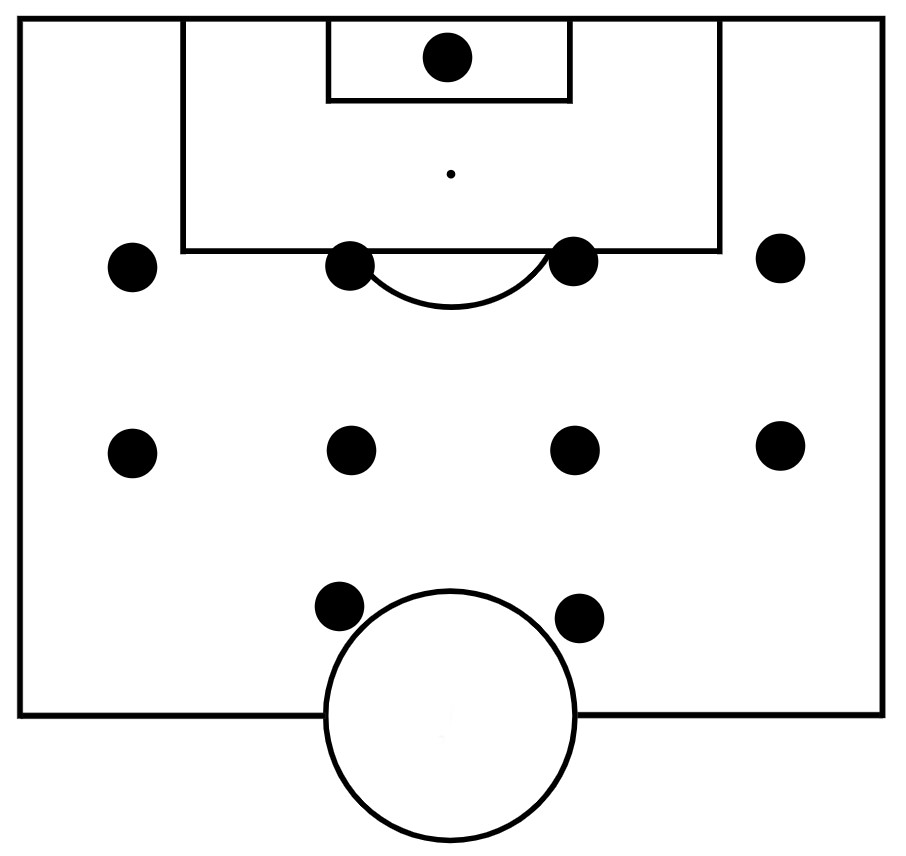
In a diamond 4-4-2, you see in the following image that the formation still carries four defenders, four midfielders, and two forwards, but the midfield takes on a new shape.
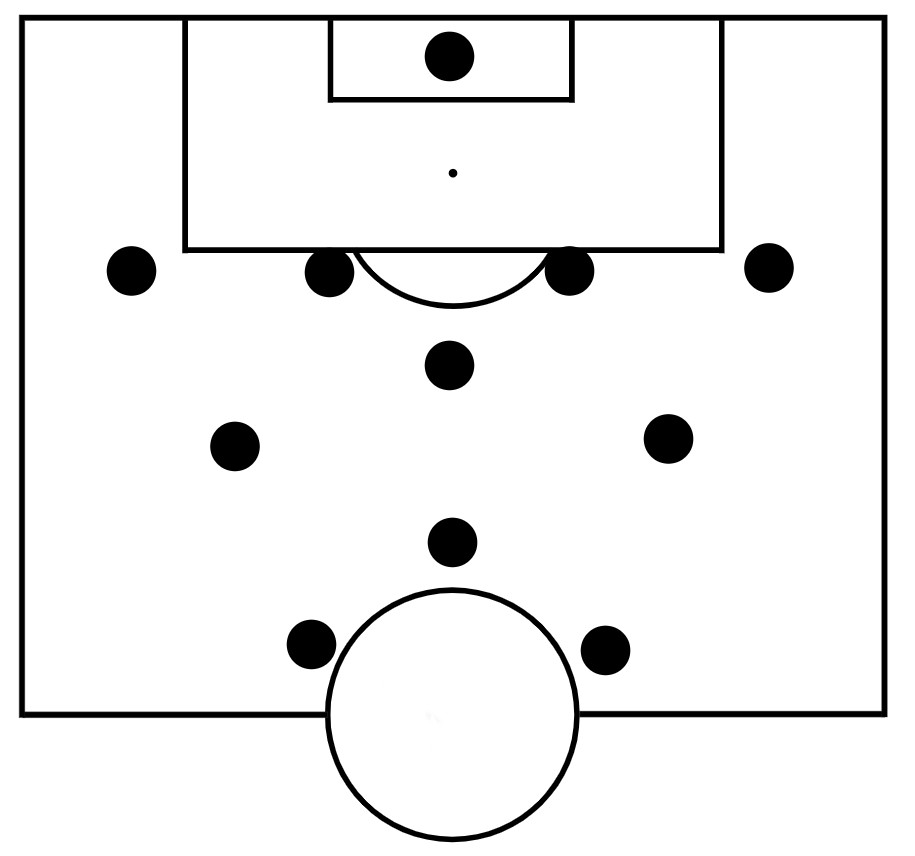
In the diamond 4-4-2 image shown above, you can see the wingers (outside midfielders) are tucked in toward the center and provide a more centralized system of support between the defenders and the forwards.
Here are some strengths that are often associated with a diamond 4-4-2:
- A strong “spine” leading from the goalkeeper to the forwards
- Extra support for the defense by having a defensive midfielder
- If the midfielders condense, opposing traffic can be flushed outside
- Possible numbers advantage in the midfield
- More space for outside backs to advance and get involved while on offense
- Keeping two forwards with additional support from the advancing midfielder
Here are some of the weaknesses involved in a diamond 4-4-2:
- Outside backs can get overloaded if the opponent decides to push numbers forward
- Lack of width the further you move up in the formation
- Tendency to rely too much on outside backs to provide attacking width
- If the midfielders don’t maintain formational integrity, the opposition can find plenty of half spaces of which to take advantage
Here’s a good example of Union Omaha’s defensive use of the diamond 4-4-2:
In the video, you can see Forward Madison attacking one corner, not finding any options, dropping the ball, and continuing the same actions on the other side of the field. You can see that Union Omaha’s midfield is condensed, clogging up passing lanes, eliminating any half spaces for Forward Madison to utilize, moving personnel from one side of the field to the other, and forcing the Flamingos into a low-probability attack that resulted in a Union Omaha goal kick.
Here’s a good example of Union Omaha’s shape costing them an offensive opportunity in the second half:
As Union Omaha takes the throw-in and establishes possession, you can see midfielder and team captain Conor Doyle sink back so far that he’s even with the two central defenders. In doing so, no one fills that void in the middle of the field and Forward Madison suddenly has a numbers advantage in that space. Rather than rotating players into passing channels and possibly dragging a defender out of position, the Owls send a long pass that goes straight to the opposition.
We don’t know what shape and tactics the Owls will use this weekend as they hit the road to take on One Knox this weekend, but with the continued work from Head Coach Dominic Casciato and the rest of his technical staff, the Owls will continue to tighten up their specific roles on the field. As those roles become even more defined and refined, the on-field performances will continue to shine.
After the first week of action from the Owls, there’s still so much excitement ahead, so stay tuned for more mini tactical breakdowns as the season progresses.
 Who Gives A Hoot?